

Why Use a Shuttle System at All?
In an era where the logistics industry must face the challenges of digital transformation amid growing market dynamics, flexible adaptation to fluctuating demand is essential for staying competitive. Efficient warehouse processes, space savings, and cost efficiency are decisive factors. Shuttle systems are a promising solution that meets these requirements. In this article, we will explore the history, functionality, advantages, and conclusions regarding shuttle systems.
The History of Shuttle Warehouse Systems:
The development of shuttle warehouse systems has a fascinating origin story. The idea of storing and retrieving products using autonomous shuttles within a rack system was conceived many years ago. The Fraunhofer Institute in Dortmund played a pivotal role in developing this innovative technology. In 2001, a group of researchers at the institute – including Volker Jungbluth – began a brainstorming process to explore the potential of a new type of warehouse system. This creative session gave rise to the concept of the shuttle: autonomous vehicles operating within a rack system that bring goods directly to warehouse staff. After intensive research and development, the shuttle system was eventually adopted by Dematic and has been continuously advanced ever since.
What Is a Shuttle System?
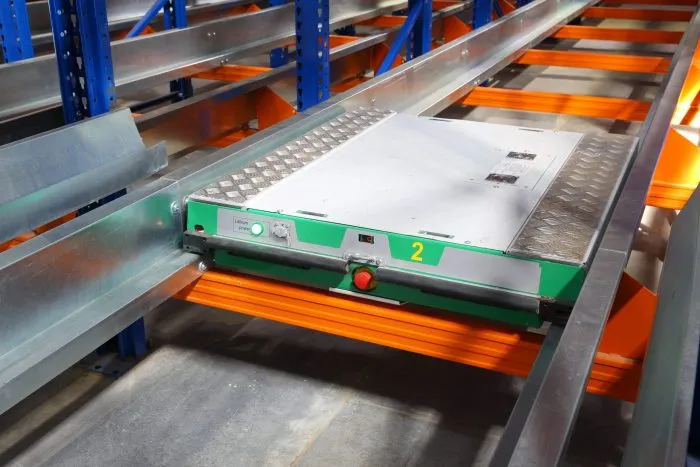
A shuttle system is an automated storage and retrieval system that optimises the efficiency of warehousing. It consists of specialised vehicles – the shuttles – that operate autonomously within a rack system. These shuttles move along rails or track systems mounted within the shelving. The shuttle system enables the storage and retrieval of containers, cartons, or trays, and allows employees to access products directly at their workstations.
How Does a Shuttle System Work?
The operation of a shuttle system is efficient and well-conceived. First, orders are optimised and the relevant data is downloaded. The shuttles are then instructed by the software and control systems to travel to the relevant products within the rack system. The shuttles pick up the products and transport them to the ends of the aisles, where they are transferred to special lift units. These lifts raise the products to the correct height to be handed over to conveyors or autonomous mobile robots for subsequent work processes such as picking, route creation, packing, and so on.
Here are some examples of shuttle systems from well-known manufacturers:
-
Multishuttle (Dematic)
-
Flexi/Cuby (SSI SCHÄFER)
-
OSR Shuttle (Knapp)
-
Stingray Shuttle (TGW)
-
ADAPTO Shuttle System (Vanderlande)
-
CycloneCarrier (Swisslog)
What Are the Advantages of a Shuttle System?
The shuttle system offers a number of advantages for companies looking to optimise their warehousing:
High efficiency and throughput: Shuttles enable fast and efficient transport of products within the warehouse. The high throughput leads to accelerated order processing and improved delivery times.
Space savings: By storing products vertically within rack systems, the available space is used to maximum effect. This results in higher storage capacity within a limited footprint.
Scalability: The shuttle system is flexible and can be easily scaled to meet increasing demands. The number of shuttles can be increased as needed without requiring additional floor space.
Error reduction: Automating warehouse operations and the precise control of shuttles minimises human error. This leads to improved inventory management and a reduction in losses.
Reliability and resilience: The shuttle system is designed to minimise downtime. Even if one shuttle fails, operations can continue smoothly, as the remaining shuttles can take over the tasks.
Shuttle systems have proven to be an innovative solution for warehousing. Thanks to their efficiency, scalability, and space-saving design, they offer companies the opportunity to optimise their warehouse processes and remain competitive. With the continued advancement of this technology, we will see even greater progress in warehouse automation in the years ahead. Companies should carefully evaluate the benefits of a shuttle system and consider its implementation to improve their warehousing and meet the demands of a dynamic market.